Wan 2.6 vs Kling 2.6 has become one of the most searched AI video comparison topics in 2026. As AI video engines move from experimental tools into real production workflows, creators are no longer asking if they should use AI video—but which model can truly deliver stable, cinematic, and repeatable results.
This guide provides a deep, real-world comparison of Wan 2.6 vs Kling 2.6, analyzing cinematic quality, motion logic, character stability, workflow structure, and practical production scenarios. If you are choosing a long-term AI video engine, this breakdown shows which platform is truly built for creators who need reliable output.
The Evolution of AI Video Engines
AI video generation has evolved in three major phases:
Random experimental visuals
Controlled motion generation
Production-grade cinematic engines
Wan 2.6 vs Kling 2.6 represents the first generation of AI video models designed not only for beauty, but for structured cinematic storytelling and professional content pipelines.
Core Technology Comparison
Wan 2.6 Architecture
Wan 2.6 is designed around scene-based cinematic generation. Instead of generating isolated clips, it understands:
Multi-shot continuity
Stable camera language
Character identity persistence
Scene-aware motion logic
This allows Wan 2.6 to generate longer narrative sequences without visual collapse.
Kling 2.6 Architecture
Kling 2.6 emphasizes expressive motion and stylized visual freedom. Its design supports:
Highly dynamic animation
Artistic visual diversity
Rapid ideation loops
However, Kling 2.6 sacrifices scene continuity for expressive freedom.
Visual Stability: Wan 2.6 vs Kling 2.6
Feature | Wan 2.6 | Kling 2.6 |
|---|---|---|
Character Consistency | Excellent | Moderate |
Camera Stability | Cinematic & stable | Creative but volatile |
Scene Continuity | Strong | Limited |
Motion Predictability | High | Variable |
In real workflows, Wan 2.6 vs Kling 2.6 shows a clear separation: Wan 2.6 delivers production-grade stability, while Kling 2.6 excels in creative freedom.
Real-World Use Scenarios
Brand Marketing Videos
Brand content requires predictable framing, lighting, and characters. In the comparison of Wan 2.6 vs Kling 2.6, Wan 2.6 produces:
Consistent characters
Stable cinematic camera grammar
Visual continuity across campaigns
Winner: Wan 2.6
Short Cinematic Films
Cinematic storytelling depends on narrative continuity. Wan 2.6 is significantly stronger for structured storytelling than Kling 2.6.
Winner: Wan 2.6
Social Creative Clips
For expressive short-form visuals, Kling 2.6 generates more dramatic motion and artistic variation.
Winner: Kling 2.6
How to Use Wan 2.6 for Cinematic AI Video
Below is a professional workflow for creators using Wan 2.6 as a production engine.
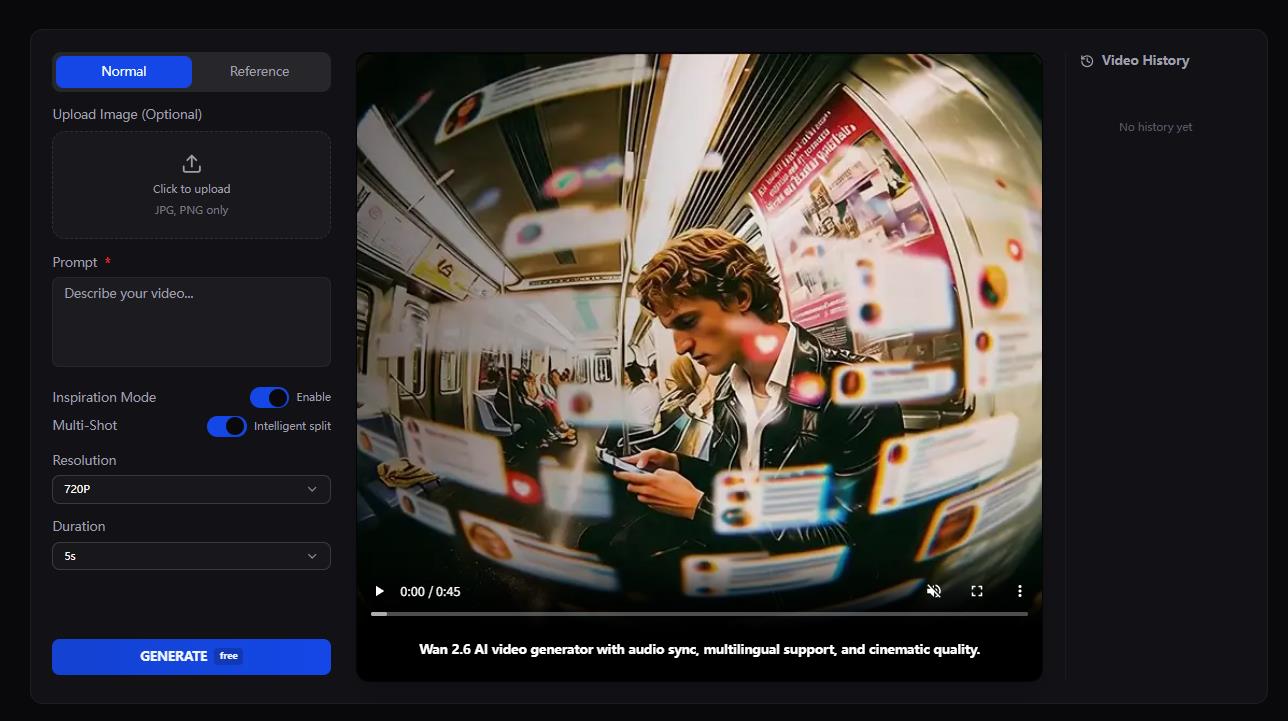
Step 1: Define Your Story Structure
Before generating, divide your story into scenes:
Scene 1: Establishing shot
Scene 2: Character interaction
Scene 3: Close-up emotional moment
Scene 4: Final resolution
Wan 2.6 performs best when scenes are clearly separated.
Step 2: Prepare Visual References
Collect:
Character reference images
Environment references
Lighting mood references
Wan 2.6 uses these references to maintain identity and tone across all scenes.
Step 3: Configure Scene Prompts
Write prompts in cinematic language:
Camera angle
Lens style
Lighting mood
Character action
Example:
“Medium close-up, cinematic lighting, soft depth of field, character slowly turns head and smiles.”
Step 4: Generate Multi-Shot Sequences
Instead of one long clip, generate scene-by-scene. Wan 2.6 maintains visual stability across shots.
Step 5: Review and Iterate
Check for:
Character drift
Lighting continuity
Camera logic consistency
Refine prompts and regenerate specific scenes as needed.
Workflow Integration
Wan 2.6 integrates smoothly into:
YouTube cinematic channels
Brand storytelling pipelines
Education and training videos
Commercial creative production
When to Choose Wan 2.6
Choose Wan 2.6 if you need:
Production-grade stability
Multi-scene storytelling
Predictable cinematic output
Commercial-ready pipelines
When to Choose Kling 2.6
Choose Kling 2.6 if you focus on:
Expressive art visuals
Creative concept exploration
Rapid visual ideation
Final Verdict: Wan 2.6 vs Kling 2.6
In the real comparison of Wan 2.6 vs Kling 2.6, the difference is fundamental:
Wan 2.6 is a production engine.
Kling 2.6 is a creative playground.
If your goal is stable cinematic storytelling and professional-grade AI video pipelines, Wan 2.6 is the foundation to build on.